

When it comes to investing in commercial real estate, investors often find themselves at a crossroads: invest in familiar, well-understood offices or turn to rapidly growing logistics? Until recently, the answer seemed obvious — warehouses were the clear favorite. However, 2026 brings adjustments: the office segment is unexpectedly showing signs of a renaissance, while logistics is entering a stabilization phase after record-breaking years.
This article provides a detailed comparison of two assets in the global market, helping you determine which one best aligns with your goals, investment horizon, and risk appetite.
Office Real Estate: An Unexpected Comeback
For a long time, offices were considered a scarce asset with rising rates, but today their market is more complex and segmented than ever.
Market Dynamics and Supply
The biggest surprise of 2026 is not a decline, but a stabilization of the global office real estate market, driven primarily by an acute shortage of quality supply. JLL analysts calculated that only 11% of global office space was built after 2020, creating enormous demand for modern, high-quality buildings. In leading global hubs such as Paris and London, the vacancy rate for new buildings in central business districts fell to record lows of 0.9% and 1.2%, respectively. New office construction is at a minimum: the US is expected to see a 75% drop in new space deliveries, while Europe's construction volumes are at their lowest since 2010.
Rental Rates and Yields

The office market in 2026 is moving toward a bipolar model. Demand and rental rates are growing primarily for high-quality, energy-efficient offices (Class A) in major business centers such as Tokyo, New York, and London. 89% of Savills experts expect rental rates for such offices to rise, with two-thirds forecasting growth of more than 2%. At the same time, secondary offices in less attractive locations continue to face high vacancy rates (17.8% overall in the US) and stagnation. Overall, the capitalization rate for office properties in 2026 is estimated in the range of 6.5–7.5%.
Investment Attractiveness
Despite the challenges, offices are regaining investor interest, primarily due to the end of the price correction period and the widespread return-to-office mandates. Savills forecasts that in 2026, the office sector will account for about a quarter ($250 billion) of total global investment in commercial real estate.
Risks and Warnings
The key risk in the office segment remains the changing nature of work. Hybrid employment has become the new norm, causing companies to continue optimizing space, which weighs on demand. In addition, operating costs for maintaining older buildings and requirements for their modernization are rising. As a result, refinancing secondary office assets can now consume more than 35% of net operating income, creating serious risks for their owners.
Logistics Real Estate: Stabilization After the Boom
The warehouse segment in 2026 is experiencing a well-deserved pause after several years of record growth, remaining one of the most stable and attractive assets.
Market Dynamics and Supply
After rapid supply growth, the logistics real estate market is entering a phase of shortage. Prologis analysts forecast that new warehouse space deliveries in 2026 will be the lowest in more than a decade. Against the backdrop of recovering demand, this will inevitably lead to lower vacancy rates and higher rental rates. The vacancy rate in Europe is expected to drop below 5% in 2026, with key logistics hubs such as Hamburg, Frankfurt, Munich, and Stuttgart seeing occupancy rates for modern warehouses approaching 100%.
Rental Rates and Yields
In 2025, global rental rates adjusted slightly, falling 2.3% in the first half of the year, but this trend reversed in the second half with stabilization and the beginning of recovery. Supply gluts are only observed in regions where speculative construction was active in previous years, such as Berlin and Leipzig. The capitalization rate for quality logistics assets in 2026 is in an attractive range of 4.5–5.0%.
Demand and Drivers
The key drivers of demand remain e-commerce and the reconfiguration of global supply chains. By the end of 2026, online sales are expected to account for nearly 20% of global retail volume, with e-commerce companies potentially occupying up to 25% of all newly leased warehouse space. Additionally, demand from the defense industry is growing, which could create additional demand of 7.5–14.9 million sq. m by 2030.
Risks and Warnings
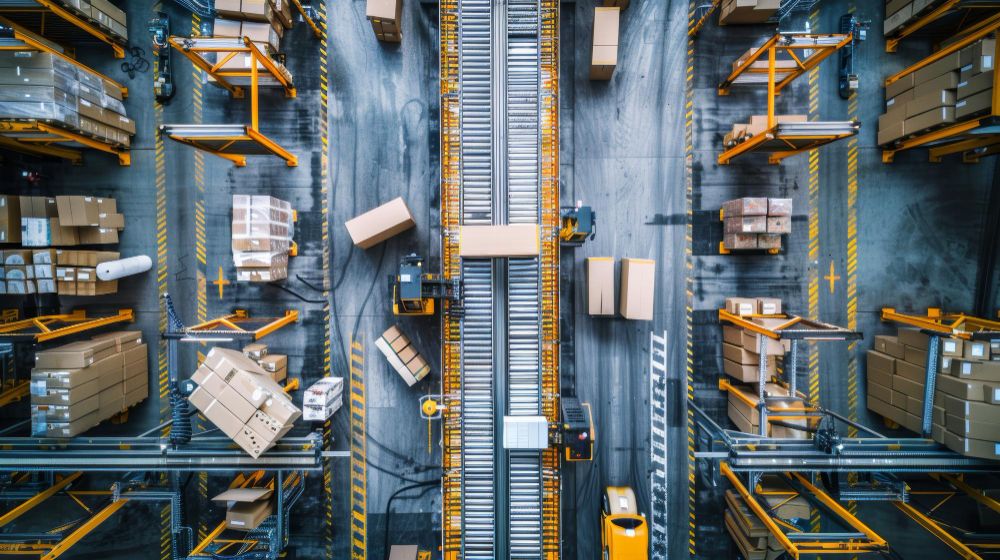
Despite the stability, investors should consider several factors. The main risk is stabilization rather than explosive growth: the extremely high growth rates of e-commerce are a thing of the past. Additionally, cheap money is leaving the market, while construction and financing costs remain high. Investment success increasingly depends on asset quality, location, energy efficiency, and readiness for automation.
New Player on the Field: Data Centers
Speaking of the hottest trends in 2026, we cannot overlook the rapid growth of data center investments. This sector attracted $270 billion in capital in 2025 alone — more than office and hospitality segments combined. It accounted for 31% of all funds raised by global investment funds in the first three quarters of 2025. The powerful catalyst for growth was the boom in artificial intelligence and cloud computing, which require ever more computing power and energy. The capitalization rate for this rapidly growing asset class in 2026 is estimated in the range of 5.0–6.0%.
Comparative Analysis: Offices, Warehouses, or Data Centers for Investment?
To decide which asset will perform better, let's evaluate key parameters based on global data.
Returns and Stability
Logistics offers good returns (capitalization rate 4.5–5.0%) and stable long-term contracts. Offices offer potentially higher yields (capitalization rate 6.5–7.5%) but come with greater risks, especially for secondary assets. Data centers offer attractive returns (5.0–6.0%) but require deep expertise in IT infrastructure and power supply.
Liquidity and Entry Threshold
Offices remain the most traditional and understandable asset, making them more liquid. Logistics, especially large distribution centers, often require larger investments but are increasingly accessible through funds. Data centers are a niche sector with the highest entry barrier, requiring specialized knowledge.
Summary Table: Office, Warehouse, and Data Center Real Estate
| Parameter | Office Real Estate | Warehouse Real Estate | Data Centers |
|---|---|---|---|
| Current Market Phase | Stabilization, polarization into quality (Class A) and secondary assets, shortage of new modern supply | Stabilization after the boom, slowdown in new supply, shortage in top logistics hubs | Sustained growth, high demand, limited supply |
| Key Demand Driver | Return-to-office (hybrid format), need for energy-efficient and modern buildings | E-commerce, reconfiguration of global supply chains (reshoring/nearshoring) | AI development, cloud computing, digitalization of the economy |
| Rental Rate Dynamics | Rising for quality Class A properties; stagnating or declining for secondary | Moderate growth or stabilization after previous correction | Sustained growth due to power and capacity shortages |
| Capitalization Rate (Yield) | 6–8% (potentially higher for riskier assets) | 4.5–6% (more stable but lower) | 5–7% (depends on region and energy efficiency) |
| Vacancy Rate | Polarized: very low (<2%) for new CBD offices in global cities, high (15–20%) for outdated buildings | Historically low (3–6%) in most developed markets, may rise in oversupplied locations | Extremely low (virtually zero) in high-demand regions |
| Key Risks | Hybrid work model, high refinancing and modernization costs | Slowing e-commerce growth, high construction and financing costs | Enormous energy consumption, strict regulation, rapid technological obsolescence |
| Investor Advantages | Understandable and liquid asset, high yield potential when choosing quality properties | Stable long-term cash flow from reliable tenants, inflation hedge | Ultra-high long-term growth, long-term contracts, strategic importance |
| Typical Entry Threshold | Relatively low (small lot purchases possible) | Medium or high (often through funds or co-investment) | High (requires expertise and significant capital) |
How to Choose Your Path: An Investor's Guide

Choose Offices If...
Your goal is conservative capital preservation with moderate returns in a familiar segment. You are prepared for market polarization and are exclusively targeting high-quality Class A assets in global cities that benefit from supply shortages. You value clarity and liquidity. Offices are your choice if you are not chasing maximum returns but value predictability.
Choose Warehouses If...
You seek a balance between stability and growth potential. You believe in the long-term trends of e-commerce and global supply chain reorganization. You are attracted by stable rental income from reliable tenants and the potential for asset value growth amid a supply shortage. Logistics is for those who value higher returns than offices and are willing to accept higher entry costs.
Choose Data Centers If...
You are an institutional investor or an advanced private player with a 10+ year planning horizon. You are willing to understand technology, energy, and regulation. You want to invest in an asset where demand will only grow due to AI and economic digitalization. Data centers are for those seeking maximum long-term growth and are ready for regulatory and rapid technological obsolescence risks.
Conclusion: Diversification Among Global Megatrends
The main takeaway of today is that the commercial real estate market is no longer monolithic. There is no universal "best" asset — only the one that best fits your strategy. The office market is coming back to life, but its nature has changed forever: now it's a story about quality and scarcity. Logistics has transitioned from a boom to a phase of sustainable, predictable growth for decades to come. And on the horizon, a new giant is already emerging — data centers, which are reshaping global capital flows.
The optimal strategy for an investor serious about commercial real estate is diversification across these segments, regions, and countries within a global portfolio.
Our team is ready to help you structure a commercial real estate portfolio, selecting the optimal combination of office and warehouse assets for your goals. We support clients at every stage: from market analysis and property selection to legal transaction support and subsequent asset management.
Invest wisely, diversify smartly — and let your square meters work for you 24/7.